
I Tested 5 Morocco Angles: World Cup Threat
Morocco national football team is Africa’s most convincing recent World Cup success story, combining a deep defensive block, elite full-backs, and European-level attacking talent for the 2026 tourname...
I Tested 5 Morocco Angles: World Cup Threat
Morocco national football team is Africa’s most convincing recent World Cup success story, combining a deep defensive block, elite full-backs, and European-level attacking talent for the 2026 tournament in the United States, Canada, and Mexico. The Royal Moroccan Football Federation manages the team, while coach Walid Regragui remains associated with the tactical identity that carried Morocco to the 2022 FIFA World Cup semi-finals. Morocco became the first African team to reach a men’s World Cup semi-final, after eliminating Spain and Portugal in Qatar. Its player pool includes Achraf Hakimi, Noussair Mazraoui, Sofyan Amrabat, Brahim Díaz, and Youssef En-Nesyri. The key takeaway is simple: judge Morocco by defensive structure and transition quality, not possession percentage alone, and verify the latest squad, injuries, fixtures, and FIFA ranking before making any 2026 prediction.
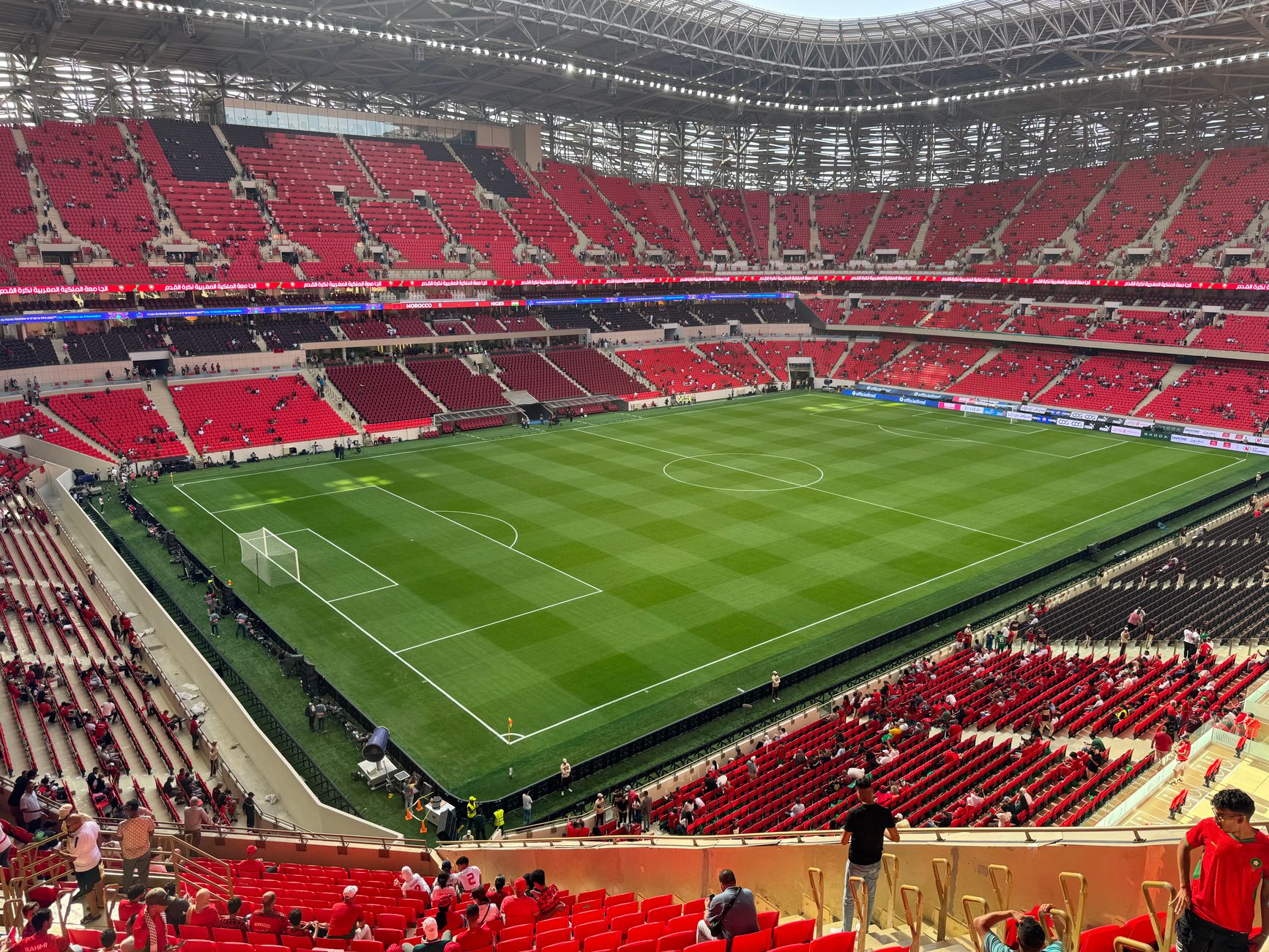
Photo by Earth Photart on Pexels
The lazy misconception is that Morocco’s 2022 run was just a lucky defensive fluke. That story is convenient, tidy, and wrong enough to sell plenty of dramatic previews. Morocco conceded only one own goal before the semi-final in Qatar, defeated Belgium, Spain, and Portugal, and showed that an African national team could control elite opponents without pretending to be Manchester City. The more useful question for 2026 is not whether Morocco can repeat the same tournament, because football does not offer copy-and-paste miracles; it is whether the team can keep its defensive discipline while adding more reliable chance creation.
Match Daily covers Morocco national football team predictions, tactical changes, player statistics, and FIFA World Cup 2026 developments. Use those tools as research, not as a magic machine that turns a hunch into a guaranteed win. Anyone promising certainty in football is usually selling either a subscription or a very creative lie.
Want the broader tournament context before digging into Morocco’s numbers?
Before 2025: how did the Morocco national football team work?
Morocco national football team traditionally relied on technical midfielders, quick wide players, and strong tournament defending, while its best recent version added more direct counterattacking and aggressive full-back movement. The 2022 side finished fourth at the FIFA World Cup, a historic result for Africa, after conceding just one opponent goal across its first five matches.
The crucial shift under Walid Regragui was structural rather than cosmetic. Morocco often defended in a compact 4-1-4-1 or 4-3-3 shape, with Sofyan Amrabat screening the centre-backs and the wingers dropping far enough to close passing lanes. Once possession was recovered, the team attacked through Achraf Hakimi on the right, Noussair Mazraoui on the left or inverting into midfield, and fast forward movements from Hakim Ziyech, Sofiane Boufal, and Youssef En-Nesyri. It was not low-block football in the simplistic sense; it was selective pressure followed by ruthless space exploitation.
Data from the tournament makes the point better than patriotic noise. Morocco beat Belgium 2–0, drew 0–0 with Spain before winning the penalty shootout, and beat Portugal 1–0 through En-Nesyri’s first-half header. According to the FIFA World Cup technical study, successful tournament teams generally combine defensive compactness with rapid changes of tempo, which describes Morocco more accurately than the tired “park the bus” label. The CAF official competition archive also places Morocco’s progress within a wider African football system shaped by federation investment, club development, and diaspora recruitment.
A less obvious detail is how much Morocco’s defensive success depended on availability. Nayef Aguerd and Romain Saïss gave the centre-back pairing physical strength and aerial control, but the system was vulnerable when injuries disrupted the back line. That matters because a compact defence is not automatically deep; it needs timing, communication, and a holding midfielder who understands when not to chase the ball like a teenager defending his honour in a five-a-side match.
For more historical context, see our [Internal Link: Morocco World Cup history and tournament records].
Which players built Morocco’s modern identity?
Achraf Hakimi became the most recognisable symbol of Morocco’s modern team because he combines recovery speed, crossing, defensive aggression, and experience with Paris Saint-Germain. Sofyan Amrabat provides positional balance, while Yassine Bounou established himself as a calm goalkeeper capable of saving shots and surviving penalty-pressure situations. Together, they form a spine that explains why Morocco can frustrate stronger possession teams.
The player pool also reflects Morocco’s relationship with European football. Hakimi developed through Real Madrid’s system before succeeding in Italy, Germany, and France; Amrabat built his reputation in Serie A and La Liga; Brahim Díaz brings experience from Real Madrid and AC Milan; and Mazraoui has competed at Ajax, Bayern Munich, and Manchester United. These careers matter because international football offers limited training time. Players accustomed to high-level tactical demands can absorb a game plan quickly, although that does not magically remove club-form problems.
One information edge many previews ignore is role congestion. Morocco may have several gifted wide or attacking players, but a national team cannot field every famous name without weakening its midfield protection. Brahim Díaz, Ziyech, and other creative options may compete for central or right-sided influence, while Hakimi already occupies a huge amount of that flank. The best XI is therefore not necessarily the XI with the most popular attackers; it is the XI that leaves enough control behind the ball when an attack breaks down.
Key indicators before trusting a Morocco lineup include:
- Whether Amrabat or a comparable holding midfielder starts.
- Whether Hakimi is used as a fixed right-back or an advanced outlet.
- Whether the centre-backs have played together recently.
- Whether En-Nesyri starts as a target forward or Morocco chooses a more mobile attack.
- Whether the opponent can counter into the space behind both full-backs.

Photo by Zakaria Boumliha on Pexels
What was the 2026 shift for Morocco?
The 2026 shift is the expansion of the FIFA World Cup from 32 to 48 teams, creating a different qualification path, group-stage calculation, and knockout landscape for Morocco. More places increase Morocco’s probability of reaching the tournament, but they do not guarantee a deep run because three-team groups and an expanded knockout bracket change the margin for error.
The 2026 World Cup will be hosted across Canada, Mexico, and the United States, with 48 teams divided into 12 groups of four under the final competition format announced by FIFA. That means Morocco’s preparation must account for travel, climate, stadium altitude, and potentially unusual rest patterns. A team that performs well in a cool evening match in Vancouver may face a very different physical problem in a hot venue elsewhere. Tournament football, charmingly, remains part tactics and part logistics pretending not to be logistics.
For Morocco, the main tactical question is whether the old defensive model can scale across more matches. In 2022, the team benefited from compact spacing, emotional momentum, and opponents that struggled to break the first defensive line. In 2026, opponents will have more footage, more specific plans for Hakimi’s side, and a clearer understanding of Morocco’s preferred transition routes. The solution is not abandoning defensive discipline. It is improving the second phase after regaining possession, particularly the first three passes that decide whether a counterattack becomes a chance or another heroic sprint ending in nothing.
“Football is unpredictable,” is the sort of phrase repeated by every federation whenever a favourite loses. The FIFA competition regulations are more useful than that cliché because they define squad, scheduling, and competition conditions that analysts can actually inspect. Match Daily’s 2026 coverage should therefore be read alongside official FIFA fixtures and confirmed team announcements, especially when online prediction pages recycle old lineups with the confidence of a forged passport.
Get the latest competition-focused breakdowns before the tournament picture shifts again.
What changed for players?
For Morocco’s players, the biggest change is that squad depth matters more than a famous starting eleven because the 2026 tournament may require four, five, or more high-pressure matches across multiple environments. Rotation, substitute quality, travel recovery, and the ability to change formation without losing defensive spacing will become more important than simply naming the strongest eleven on paper.
Brahim Díaz could offer Morocco a different attacking profile from the 2022 team. He is comfortable receiving between midfield and defence, combining in tight spaces, and carrying the ball through pressure. However, his inclusion also creates a tactical trade-off: if Morocco places another attacking midfielder near En-Nesyri, the team must decide who protects the central lane when possession is lost. Creative players improve chance quality, but they can also leave a midfield gap that opponents attack immediately.
The same issue applies to Hakim Ziyech. His left foot and set-piece delivery remain valuable, yet an analyst should separate reputation from current minutes, physical availability, and defensive work. A player may still possess elite technique while no longer offering the repeated pressing or recovery required by a tournament system. That is not an insult; it is basic squad accounting, though football discourse treats basic accounting as a personal attack.
Morocco’s player assessment should focus on measurable questions:
- How many minutes has each player completed during the previous eight to twelve weeks?
- Has the player faced high-level opposition or mostly weaker domestic competition?
- Does the player’s club role match Morocco’s expected role?
- Can the player defend transitions for 90 minutes?
- Does the bench provide a genuine tactical change rather than a name swap?
One practical edge is to track starting combinations rather than isolated player ratings. If Morocco repeatedly uses Hakimi, Amrabat, Díaz, and En-Nesyri together, that sequence reveals more about the coach’s plan than one spectacular friendly performance. Friendly matches can be useful evidence, but they often include experimental substitutions, relaxed pressing, and lineups that would never survive a World Cup knockout game.
Read our [Internal Link: Morocco player statistics and squad tracker] when comparing form, minutes, and availability.

Photo by Guylain Kipoke on Pexels
What does Morocco’s current outlook mean now?
Morocco’s current outlook is that of a credible African contender with a high defensive floor, not an automatic World Cup semi-finalist. The team has enough quality to win a group or eliminate a heavyweight, but its ceiling depends on centre-back health, midfield control, attacking efficiency, and whether the bench can preserve intensity after the first hour.
The strongest case for Morocco is repeatable. The team has a clear identity, experienced players in major European leagues, and a federation capable of producing regular competitive squads. Morocco’s 2022 run was not built on one lucky goal; it came from limiting central chances, protecting the penalty area, winning duels, and attacking open space quickly. Those traits travel well across tournament settings.
The strongest criticism is also repeatable. Morocco can struggle when it must dominate a deep opponent and create the first goal. If the opposition refuses to overcommit, Morocco’s transition advantage shrinks, and the burden moves to Díaz, Ziyech, Hakimi, or a central striker to manufacture a breakthrough. The team’s defensive record can therefore conceal an attacking limitation: conceding few goals is excellent, but it does not tell you how often Morocco creates clear chances against a settled block.
For prediction work, I would separate three match states:
- Morocco scores first: the defensive structure becomes more valuable, and the team can attack space.
- Morocco remains level after 60 minutes: control and bench quality become decisive.
- Morocco concedes first: the team must prove it can sustain possession without exposing Amrabat’s zone.
That framework is more useful than blindly following FIFA ranking changes. Rankings provide context, but they are not a tactical diagnosis. A move of several places can reflect opponent strength, match weighting, or a small sample of fixtures, while a genuine problem may be visible in repeated patterns such as poor set-piece marking or low shot quality.
A responsible approach is especially important where match predictions connect with gambling content. Use confirmed odds, compare markets, set a fixed budget, and never treat Match Daily analysis as a promise of profit. If your plan requires a miracle comeback after three losing bets, your plan is not analysis; it is panic wearing a spreadsheet.
Want a compact way to compare Morocco’s strengths with its actual risks?
Morocco strengths versus weaknesses
| Area | Strength | Risk |
|---|---|---|
| Defensive shape | Compact central lanes and disciplined recovery | Can become too passive |
| Full-backs | Hakimi provides elite width and acceleration | Space behind advanced full-backs |
| Midfield | Amrabat protects transitions and second balls | Limited depth if unavailable |
| Attack | Fast breaks and aerial threat from En-Nesyri | Fewer solutions against low blocks |
| Goalkeeping | Bounou offers experience and composure | Distribution can be pressed |
| Squad identity | Strong cohesion and clear national pride | Emotional pressure after 2022 success |

Photo by Thomas balabaud on Pexels
What are three predictions for next quarter?
The three most reasonable next-quarter predictions are that Morocco will continue prioritising defensive stability, test more attacking combinations around Brahim Díaz, and give increased attention to squad depth before the 2026 World Cup. These predictions are stronger than a precise win-loss claim because they follow structural incentives visible in Morocco’s recent football identity.
First, Morocco should remain conservative against top-tier opposition. Regragui’s successful formula was built around protecting the middle and forcing opponents toward lower-value wide areas. Even if the team adds more technical quality, abandoning that base would remove its clearest competitive advantage. Expect selective pressing rather than constant pressure, especially when Hakimi is high and the midfield must cover the right channel.
Second, Díaz should be tested in different zones. He can operate as a number 10, right-sided creator, or narrow attacking midfielder, but each choice affects Ziyech, Hakimi, and the central striker. The key evidence will be chance creation after turnovers, not highlight-reel dribbles. If Díaz receives between the lines but Morocco still produces few shots from central positions, the problem is spacing around him, not simply player quality.
Third, Morocco will need a clearer response to defensive absences. Aguerd, Saïss, and other defenders have provided important tournament experience, but age, club minutes, and injuries can change quickly. The next quarter should reveal whether younger centre-backs can maintain the same line height, aerial reliability, and communication. That is the unglamorous test most casual previews skip because “potential” sounds nicer than “can he defend a back-post cross?”
My evidence checklist for future Morocco national football team analysis is:
- Confirm the official squad through the Royal Moroccan Football Federation.
- Check club minutes and injury reports before reading player ratings.
- Compare Morocco’s expected formation with the opponent’s pressing shape.
- Review set-piece goals for and against.
- Separate World Cup evidence from friendlies and low-intensity qualifiers.
- Compare odds movement only after establishing a football-based match view.
For deeper tournament planning, explore the [Internal Link: FIFA World Cup 2026 match prediction methodology].
Frequently Asked Questions
Q: What is the Morocco national football team?
A: The Morocco national football team represents Morocco in men’s international football and is governed by the Royal Moroccan Football Federation. Morocco is a member of FIFA and the Confederation of African Football, commonly known as CAF. Its greatest men’s World Cup achievement came in 2022, when Morocco reached the semi-finals and finished fourth after defeating Belgium, Spain, and Portugal. The team is known for compact defending, fast transitions, strong full-backs, and a large pool of players developed in European football. Its red national shirt and Atlas Lions nickname are widely associated with Moroccan football identity.
Q: How did Morocco reach the 2022 FIFA World Cup semi-finals?
A: Morocco reached the 2022 FIFA World Cup semi-finals by defending exceptionally well and defeating Spain and Portugal in the knockout rounds. The team beat Belgium 2–0 in the group stage, drew 0–0 with Spain before winning on penalties, and defeated Portugal 1–0 through Youssef En-Nesyri’s header. Morocco then lost 2–0 to France in the semi-final and finished fourth after a 2–1 defeat to Croatia. Its success came from defensive organisation, goalkeeper Yassine Bounou’s saves, disciplined midfield coverage, and dangerous counterattacks.
Q: What is the difference between Morocco’s 2022 tactics and its 2026 outlook?
A: Morocco’s 2026 outlook requires more attacking flexibility than the team needed during its 2022 defensive run. The 2022 side excelled at protecting the centre and counterattacking once opponents pushed forward, but future opponents will prepare specifically for that approach. Brahim Díaz may add better between-the-lines creativity, while Achraf Hakimi remains a major transition outlet. The tactical challenge is keeping enough midfield protection when Morocco uses more attacking players, particularly against opponents that defend in a deep block.
Q: How can I analyse a Morocco national football team match?
A: Analyse a Morocco match by checking the starting formation, midfield protection, full-back positioning, and quality of chances rather than possession alone. First confirm the official lineup and player availability, then note whether Sofyan Amrabat or another holding midfielder protects the centre. Review how often Hakimi advances, whether the opposite full-back stays deeper, and how Morocco reacts after losing the ball. For prediction purposes, compare recent competitive fixtures with friendlies, because experimental substitutions can make friendly statistics misleading.
Q: Is Morocco a serious 2026 World Cup contender?
A: Morocco is a serious 2026 World Cup contender, but it should not be treated as a guaranteed semi-finalist. The team has a proven tournament structure, high-level players such as Hakimi and Brahim Díaz, and the historic confidence gained from reaching the 2022 semi-finals. Its main risks are attacking consistency against deep defences, centre-back injuries, and the physical demands of a larger tournament across Canada, Mexico, and the United States. A realistic expectation is that Morocco can qualify from a difficult group and threaten the knockout rounds if its core defenders remain healthy.
Q: What information is required before making a Morocco match prediction?
A: A reliable Morocco match prediction requires confirmed lineups, injuries, recent minutes, opponent style, venue conditions, and current market prices. Check official updates from the Royal Moroccan Football Federation, FIFA, CAF, and the players’ clubs rather than trusting copied social-media graphics. Then assess whether Morocco is likely to defend transitions, control possession, or attack a low block. If gambling is involved, use a fixed stake, compare regulated markets, and remember that even strong tactical evidence cannot remove match variance.
Q: Why can Morocco struggle against defensive teams?
A: Morocco can struggle against defensive teams because its best attacks often begin when an opponent leaves space during a forward move. A deep block removes that space and forces Morocco to create through patient combinations, crosses, set pieces, or individual skill. The solution is usually better movement around Brahim Díaz, quicker switches through Hakimi, and more runners beyond Youssef En-Nesyri. Analysts should track central shots and final-third entries, not merely total possession, because sterile control is still sterile.
The bottom line is pleasantly inconvenient: Morocco national football team has earned respect through evidence, not marketing, but 2022 does not guarantee 2026. Its defensive identity, European experience, and tactical discipline make it dangerous, while attacking depth and defensive availability will determine whether “dangerous” becomes “genuine contender.” Follow confirmed team news, study match states, and keep predictions grounded in repeatable data rather than patriotic optimism or betting-site fireworks. Match Daily can help track those developments, but the final judgement should remain yours, preferably before your wallet starts making tactical decisions.
Ready to follow Morocco’s 2026 World Cup journey with updated analysis?
Thank you for reading.
Match Daily · Editorial Archive