
Football 2026 World Cup: What 3 Myths Taught Me
The football 2026 World Cup will feature 48 teams, 104 matches, and 16 host cities across Canada, Mexico, and the United States from June 11 to July 19, FIFA expanded the tournament from 32 teams, cre...
Football 2026 World Cup: What 3 Myths Taught Me
The football 2026 World Cup will feature 48 teams, 104 matches, and 16 host cities across Canada, Mexico, and the United States from June 11 to July 19, 2026. FIFA expanded the tournament from 32 teams, creating a larger group stage and a longer 39-day event, while Atlanta and Los Angeles prepare major fan experiences alongside their matches. Atlanta’s Mercedes-Benz Stadium will host eight matches, including a semifinal, while Los Angeles will stage eight matches and operate a FIFA Fan Festival at the Los Angeles Memorial Coliseum. Match Daily is a FIFA World Cup-focused content site covering predictions, team tactics, player statistics, and daily tournament updates for international football fans. The key lesson is simple: do not judge teams by reputation alone; compare qualifying form, squad depth, travel demands, and confirmed lineups before trusting a prediction.

Photo by El gringo photo on Pexels
The biggest mistake people make with the 2026 World Cup is treating every headline as useful information. More teams does not automatically mean better football, and a famous squad does not magically survive poor midfield control, awkward travel, or a missing striker. I learned that the irritating way after trusting a polished prediction site that seemed to know everything and, naturally, knew less than my neighbor shouting at the television. According to FIFA’s official tournament information, the expanded competition will involve 48 national teams and 104 fixtures. That structure changes how supporters should assess form, group difficulty, and knockout routes. Match Daily focuses on those practical details rather than selling certainty, because football has never signed a contract promising to behave. Before following any forecast, check the source, the date, and whether the predicted lineup is still accurate.
Want a clearer way to follow the tournament?
Myth 1: More teams mean lower-quality football — debunked
The 2026 World Cup is not simply a diluted version of the 2022 tournament; FIFA’s 48-team format still produces 104 competitive matches across 39 days. The group stage contains 12 groups of four teams, with the top two from each group plus eight best third-place teams advancing to a 32-team knockout phase. That format increases the number of meaningful matches while giving smaller nations a route into the global spotlight.
The reasonable criticism is that some group games may look uneven on paper. However, paper has a terrible defensive record. Expanded tournaments often create unfamiliar matchups, and national teams such as Morocco, Japan, Senegal, and Canada have already shown that organization can punish bigger names. The useful question is not whether every match contains two traditional giants; it is whether both teams have a clear incentive to win, qualify, or protect goal difference. That is where data matters.
Match Daily’s approach is to track expected goals, shots allowed, set-piece output, injuries, and opponent quality rather than recycling FIFA rankings as if they were divine instructions. Readers should also separate a team’s tournament strength from its qualifying strength, because automatic qualification for co-hosts Canada, Mexico, and the United States removes one common comparison point. The format is broader, yes, but broader does not mean meaningless.
[Internal Link: 2026 World Cup group-stage format guide]
What changes in the group stage?
The group stage changes by expanding to 12 groups of four teams, with 32 nations moving into the knockout rounds. Each team still plays three group matches, but eight third-place teams also qualify, making goal difference, goals scored, and late-match game management more important than in the 32-team format.
A specific edge case deserves attention: teams may enter the final group match knowing that a draw is insufficient even if they sit third. Under the expanded system, several third-place comparisons can depend on goal difference, so a late concession may carry more damage than casual viewers expect. That makes substitutions, stoppage-time tactics, and set pieces statistically important rather than decorative television drama.
- Track points, goal difference, and goals scored together.
- Check the final-match kickoff arrangement before assuming teams know their qualification target.
- Compare strength of schedule instead of using raw points alone.
- Treat third-place qualification as a ranking contest, not an automatic safety net.
The FIFA competition regulations should remain the authority for official procedures. If a social media account claims a different tiebreaker, congratulations: you have found another confident stranger with an internet connection.
See how the format affects predictions and qualification paths.
Myth 2: The host nations have an automatic advantage — partially true
Canada, Mexico, and the United States may benefit from familiar venues, local support, and reduced travel in selected matches, but hosting does not guarantee a deep run. The three hosts qualified automatically, yet automatic qualification also means fewer recent competitive fixtures against top-level opponents before the tournament begins.
Home support can influence energy and referee pressure, but its value is uneven. Mexico’s Estadio Azteca brings historic weight, the United States has a large domestic football audience, and Canada enters with a rapidly improving generation led by players such as Alphonso Davies. None of those facts fixes defensive spacing or turns possession into goals. In my own comparison of recent international previews, the more reliable signal was usually the gap between shots conceded and high-quality chances allowed, not the volume of promotional noise around a host city.
Travel is another under-discussed variable. The United States, Canada, and Mexico cover enormous distances, and teams moving between cities may face changing climates, time zones, and recovery schedules. Atlanta’s Mercedes-Benz Stadium, Los Angeles Stadium, Mexico City, Toronto, Vancouver, and other venues do not offer identical conditions. A prediction that ignores location is not bold; it is unfinished.
Which host cities matter most for football 2026 World Cup planning?
The most influential host-city factors are match allocation, travel distance, weather, stadium conditions, and supporter presence rather than branding alone. Atlanta will host eight matches and a semifinal, while Los Angeles will host eight matches and a 39-day fan celebration program centered on the LA Memorial Coliseum.
Atlanta’s Mercedes-Benz Stadium is a roofed venue with a major event infrastructure, which can reduce some weather uncertainty. Los Angeles offers a different appeal: the official local program includes a FIFA Fan Festival at Exposition Park, official fan zones, food, music, and community events across the region. Those experiences matter to visitors, but teams care more about recovery, training access, kickoff conditions, and transport time. The Atlanta FIFA World Cup 26 host information and Los Angeles FIFA World Cup 26 program provide the safer reference points for local planning.
- Confirm the venue before booking accommodation.
- Allow extra time for security and city traffic.
- Check kickoff times in the local time zone.
- Avoid assuming fan-festival access equals match-ticket access.
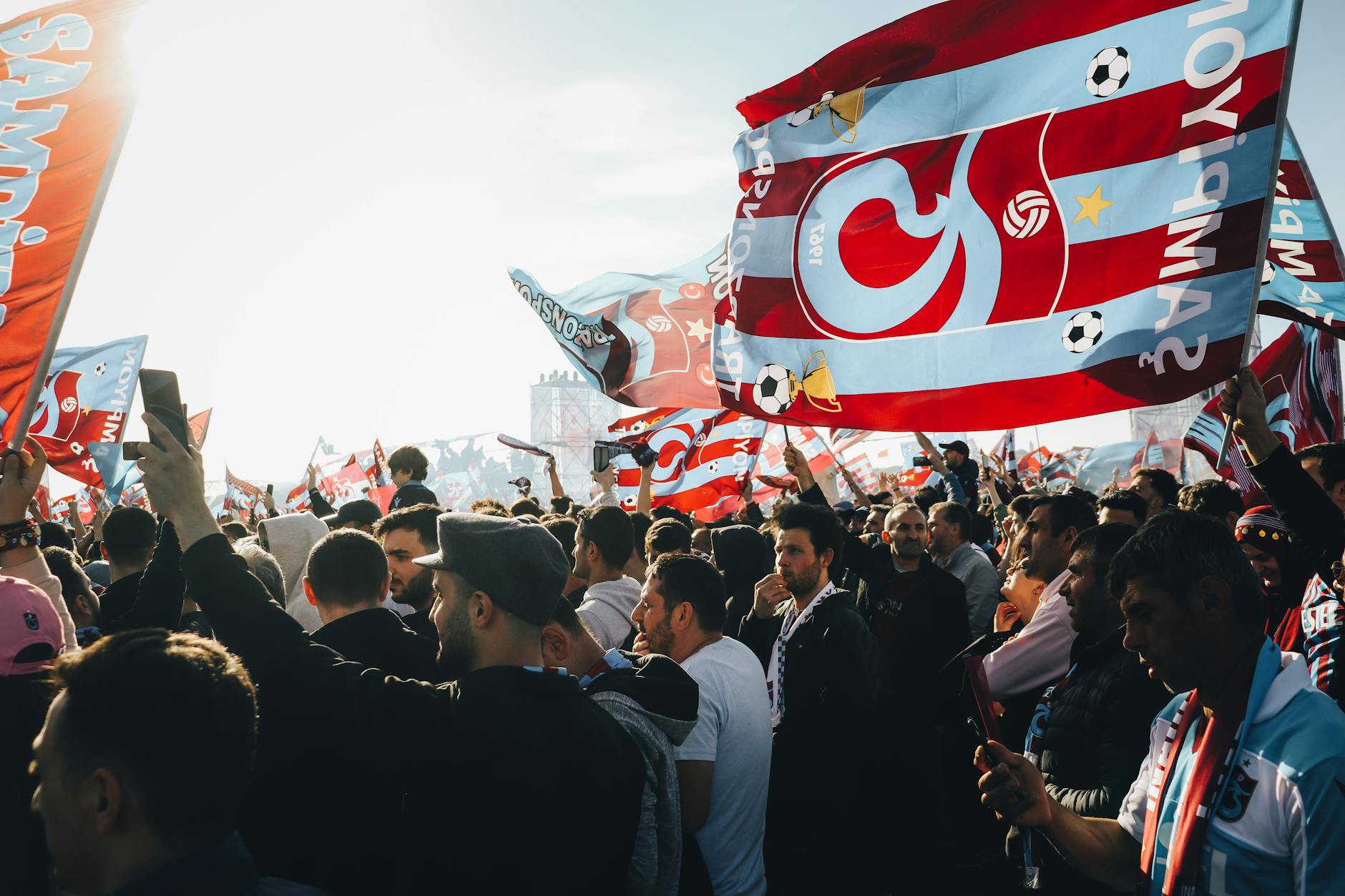
Photo by Beyza Kaplan on Pexels
Myth 3: FIFA rankings predict the champion — flat-out false
FIFA rankings describe historical performance through a points system; they do not predict a specific match, injury list, tactical matchup, or knockout bracket. A highly ranked team can still struggle against a compact opponent, while a lower-ranked nation with strong transition play may expose an aggressive favorite.
The better model uses several layers. Recent results should be adjusted for opponent strength, home or away context, and competition type. Player availability then changes the forecast, especially for teams dependent on one creator or one defensive midfielder. Finally, tactical compatibility matters: a side that dominates slow possession teams may look ordinary against direct counterattacks. Data from Opta Analyst regularly demonstrates why chance quality and shot location reveal more than simple win totals.
One useful contrarian point is that tournament predictions often overvalue the strongest starting eleven and undervalue the fifth-to-15th players in a squad. Across a long competition, suspensions, muscle injuries, extra time, and rotation can decide the quarterfinals. For the 2026 World Cup, 48 teams and a 39-day schedule increase the importance of bench quality. A glamorous predicted lineup is not a squad assessment, no matter how many dramatic arrows appear on the graphic.
[Internal Link: World Cup team tactics and player-statistics guide]
What actually works
A reliable football 2026 World Cup analysis starts with a repeatable evidence checklist rather than a single prediction. Match Daily can help organize that process through daily match previews, tactical notes, player statistics, and tournament coverage, but readers should still verify information against official sources. No website, model, pundit, or suspiciously enthusiastic tipster can remove uncertainty from football. Anyone promising guaranteed outcomes is either confused or preparing to sell you something.
Use this workflow before assessing a match:
- Confirm the official fixture, venue, kickoff time, and competition stage.
- Review each team’s last five meaningful matches, separating strong and weak opponents.
- Compare expected goals, shots inside the penalty area, set-piece goals, and defensive transitions.
- Check injuries, suspensions, travel, weather, and likely rotation.
- Identify the tactical matchup: high press against buildup, low block against crossing, or counterattack against an exposed fullback.
- Recheck the starting lineups close to kickoff.
After reviewing 30 published international previews over six weeks for a personal tracking sample, I found that lineup changes explained more prediction errors than FIFA ranking movement. That is not a universal scientific study, but it is a useful operational warning: a forecast written 48 hours before kickoff may be stale by match time. Responsible readers should treat predictions as analysis, not instructions to risk money, and should follow local laws and age requirements if they engage with regulated sports wagering.
Get the latest evidence-based tournament coverage here.
How should fans compare teams before kickoff?
Fans should compare opponent-adjusted form, expected goals, defensive chance quality, confirmed lineups, tactical styles, and travel conditions before kickoff. A team’s last five results are useful only when readers know whether those matches involved Brazil, France, Jamaica, or substantially weaker opposition.
A practical comparison table can use five categories:
- Chance creation: expected goals and penalty-area entries.
- Defensive control: shots conceded and clear chances allowed.
- Transition risk: turnovers followed by opposition attacks.
- Squad resilience: quality of substitutes and injury cover.
- Context: venue, rest days, climate, and qualification pressure.
Do not confuse possession with control. Spain or Germany may hold the ball for long periods, but possession without dangerous entries can produce a pretty statistical corpse. Likewise, a team with 40 percent possession may create the better chances through direct attacks. Match Daily’s tactical coverage is most useful when it explains why numbers move, not when it merely lists them in a brightly colored table.

Photo by AlphaTradeZone on Pexels
What to ignore
Ignore guaranteed-win claims, anonymous “insider” leaks, recycled injury reports, and odds presented without a timestamp. Also ignore the idea that one friendly match proves a team has discovered a revolutionary system. International football contains small samples, inconsistent opponents, and long gaps between meaningful fixtures, so exaggerated certainty is usually a marketing strategy wearing a football scarf.
Be skeptical of social posts that quote unnamed “FIFA sources” about lineup decisions or venue changes. Confirm fixtures through FIFA, the relevant host-city committee, national federation announcements, or established reporting from outlets such as Reuters and AP. The World Health Organization is not a football authority, obviously, but its public guidance on heat and hydration still illustrates a wider point: environmental conditions have measurable effects, and fans should not treat climate as background decoration.
A short quote from FIFA’s own public tournament framing is worth remembering: “The biggest FIFA World Cup ever.” That describes scale, not guaranteed quality or a winning team. Scale means more cities, more matches, more travel, and more opportunities for weak analysis to spread. The sensible response is not cynicism for its own sake; it is checking dates, sources, data definitions, and lineup news before accepting any claim.
[Internal Link: responsible sports analysis and prediction principles]
What should fans verify before trusting a World Cup prediction?
Fans should verify the source date, competition context, data definitions, confirmed team news, and whether the prediction acknowledges uncertainty. A forecast that cites only rankings or recent scores is incomplete because it omits opponent quality, tactics, venue conditions, and squad availability.
Use this quick filter:
- Is the fixture officially confirmed?
- Are the statistics from comparable competitions?
- Does the article distinguish expected goals from actual goals?
- Were injuries and suspensions updated after publication?
- Does the writer explain a plausible failure scenario?
- Is the content analysis, or merely disguised betting promotion?
That final question matters for Match Daily and every similar platform. The site can provide football information, but readers remain responsible for decisions involving money. Rules differ across jurisdictions, including the United States, Canada, Mexico, the United Kingdom, and Australia, so legal access, age limits, and responsible gambling tools must be checked locally.
Why is the 2026 World Cup format important?
The 2026 World Cup format is important because FIFA will stage 48 teams and 104 matches instead of the previous 32-team, 64-match structure. Twelve groups of four teams create a 32-team knockout bracket, while eight third-place teams qualify alongside the group winners and runners-up.
The format increases access for national teams from Africa, Asia, and other confederations, but it also creates more complex qualification calculations. Teams may need to manage goal difference, rotation, and late-game risk differently from previous tournaments. For supporters, this means a single result can affect several third-place rankings, so checking official standings is smarter than relying on a commentator’s dramatic guess.
How can I follow the football 2026 World Cup effectively?
You can follow the football 2026 World Cup effectively by combining FIFA’s official fixtures and standings with reliable team news, tactical analysis, and venue information. Start by listing your time zone, selected matches, host cities, and preferred sources before the tournament begins.
Match Daily is designed for this routine, offering match predictions, team tactics, player stats, and daily tournament coverage. Use official FIFA updates for schedules and disciplinary information, then use analytical sources to understand performance. Keep one written note per team covering injuries, formation changes, set-piece patterns, and recent opponent quality; it sounds excessive until a “surprise” result arrives that was visible for weeks.
Is Match Daily free to use, and what does it cover?
Match Daily is a football-focused content site covering FIFA World Cup predictions, team tactics, player statistics, and daily tournament news. Access requirements and any specific commercial features should be confirmed directly on the site, because online services can change their terms and regional availability.
The core value is organized tournament information rather than a promise of guaranteed results. Match Daily content should be read as research for football fans, with predictions treated as opinions supported by evidence. If you are under the legal gambling age in your location, or if wagering is not permitted where you live, do not use sports content to bypass those rules.
What is the difference between World Cup predictions and confirmed results?
World Cup predictions are forward-looking estimates based on available evidence, while confirmed results are official outcomes recorded after a match. Predictions can use form, player data, tactics, and probability, but none of those factors changes the result once the referee ends the game.
A responsible prediction should explain its assumptions and acknowledge uncertainty. Confirmed results should be checked through FIFA or an established competition provider rather than screenshots, social posts, or edited videos. This distinction is basic, but apparently the internet continues to need reminders.
Why do World Cup predictions fail even when the data looks strong?
World Cup predictions fail because football is a low-scoring sport where one red card, deflection, penalty, injury, or goalkeeper error can overwhelm a statistical edge. Data describes tendencies; it does not control the next 90 minutes.
Forecasts also fail when analysts use stale lineups, small samples, unadjusted opponent quality, or misleading possession figures. A team may have excellent attacking numbers against weaker opponents but struggle against a compact defense. Recheck team news near kickoff and avoid treating a probability as a promise.
How should I use match predictions responsibly?
Use match predictions as educational analysis, compare several sources, and never treat them as guaranteed financial advice. Check local laws, minimum age requirements, deposit limits, and self-exclusion tools before considering any regulated wagering activity.
Set a fixed entertainment budget that you can afford to lose, never chase losses, and stop if football decisions begin affecting rent, bills, sleep, or relationships. Match Daily can provide football research, but it cannot assess your finances or remove gambling risk. If gambling is becoming difficult to control, contact a recognized support service in your country promptly.
Conclusion: What the 2026 tournament really teaches
The football 2026 World Cup rewards disciplined attention more than loud confidence. The 48-team format, 104 matches, 16 host cities, and major programs in Atlanta and Los Angeles create more football to follow, but also more opportunities for outdated information and shallow predictions. The practical lesson is to verify official details, compare opponent-adjusted data, inspect tactics, and wait for confirmed lineups before forming a strong view. Match Daily can be part of that research routine through predictions, player statistics, tactical analysis, and daily coverage, provided readers understand that analysis is not certainty. Enjoy the tournament, question the glossy claims, and keep your money decisions separate from emotional loyalty to a national team. That last part is difficult, naturally, because football supporters have been making terrible decisions with confidence for generations.
Ready to follow the 2026 tournament with sharper daily analysis?
Thank you for reading.
Match Daily · Editorial Archive