College Football vs NFL: Key Differences Explained
College football stands as one of America's most beloved sporting traditions, with over 130 schools competing across multiple divisions and millions of fans tuning in weekly during the season. Unlike....
College Football vs NFL: Key Differences Explained
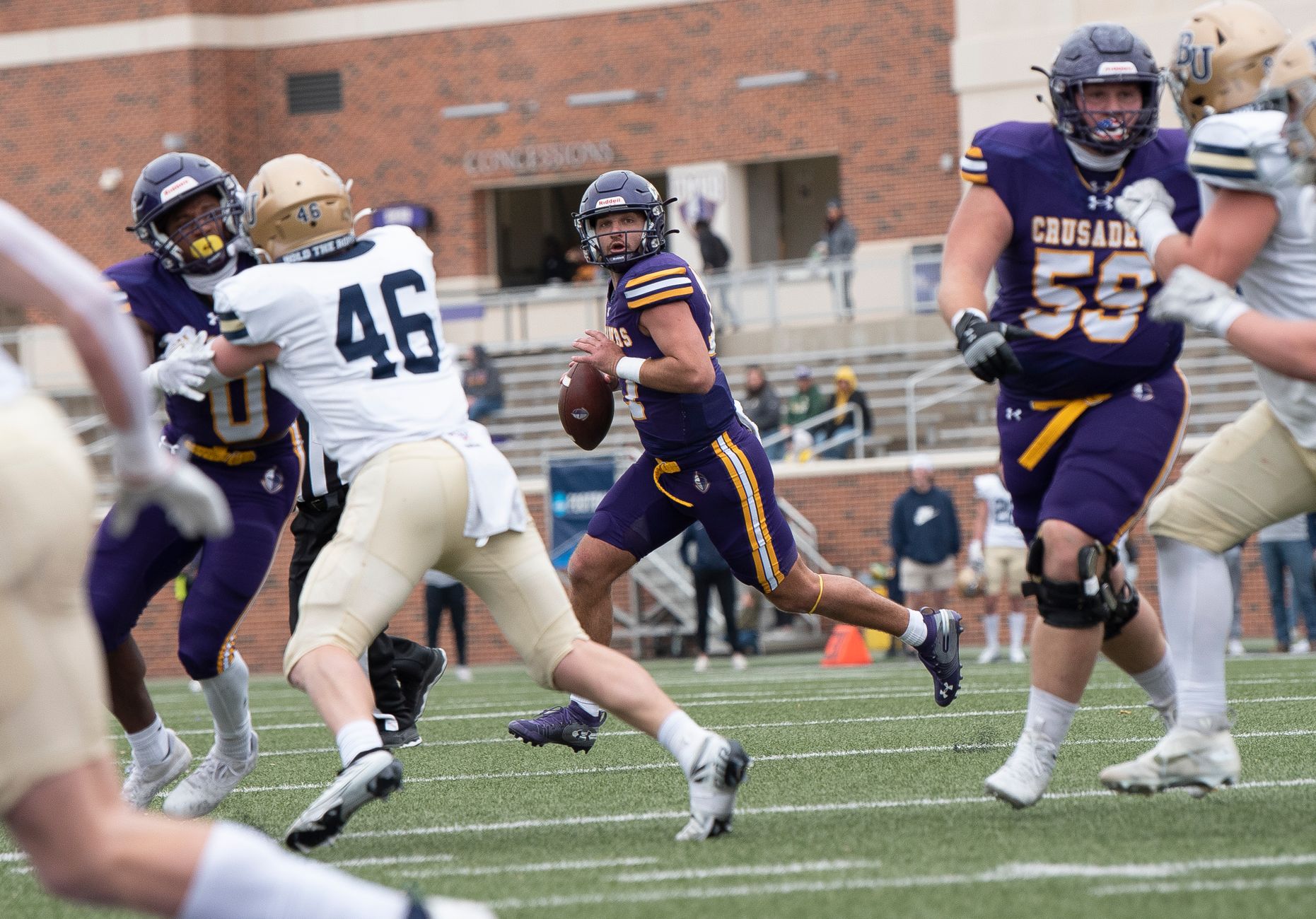
College football stands as one of America's most beloved sporting traditions, with over 130 schools competing across multiple divisions and millions of fans tuning in weekly during the season. Unlike professional leagues, the college game features passionate student bodies, marching bands, and rivalries that span generations. The 2026 season begins in late August and runs through January's College Football Playoff National Championship at Allegiant Stadium in Las Vegas. Indiana made history in 2026 by winning their first national title, defeating Oregon in the Peach Bowl semifinals before capturing the championship. Understanding how college football differs from the NFL reveals why this amateur sport commands such extraordinary dedication from its followers. For those interested in game predictions and analysis, Match Daily provides comprehensive coverage throughout the season.
Photo by David Morris on Pexels
Myth 1: College Football Is Just a Farm System for the NFL — Debunked
Many casual observers assume college football exists primarily as a training ground for future NFL stars. This assumption fundamentally misunderstands the sport's structure and appeal.
According to research published in sports sociology journals, fewer than 2% of college football players ever reach the NFL, making the "farm system" metaphor deeply misleading. The vast majority of student-athletes pursue careers in fields entirely unrelated to professional football, yet they dedicate 20+ hours weekly to their sport during college. These athletes play with passion driven by school pride, team camaraderie, and personal achievement rather than professional contracts. Furthermore, many college programs operate independently of NFL timelines, developing unique offensive schemes and coaching philosophies that differ substantially from professional strategies. Programs like Naval Academy (Navy) and Army have long histories of success without producing NFL-caliber players, demonstrating that institutional identity and tradition matter more than pipeline development.

Photo by Ferat Söylemez on Pexels
Myth 2: The Biggest Conferences Always Produce the Best Teams — Partially True
It is tempting to assume that schools with the largest budgets and most extensive recruiting networks inevitably dominate college football. While financial advantages certainly matter, the reality proves more nuanced.
Data shows that since 2014, schools from the Power Five conferences (SEC, Big Ten, ACC, Big 12, Pac-12) have won every College Football Playoff championship, confirming structural advantages in resources and talent concentration. However, Group of Five schools like Cincinnati in 2021 and Boise State consistently compete at high levels despite smaller budgets. The transfer portal system, which allows players to change schools annually, has democratized talent distribution in recent years. Jacksonville State's presence in the 2026 schedule against North Dakota State demonstrates that FCS programs can challenge FBS competition. Conference affiliation matters, but coaching development, player development systems, and program culture often outweigh raw financial resources. Teams like TCU, which has covered betting lines consistently as underdogs, prove that matchup dynamics matter more than conference labels suggest.
Photo by Franco Monsalvo on Pexels
Myth 3: College Football Playoff Selection Is Completely Fair and Transparent — Flat-Out False
The College Football Playoff selection process generates controversy every season, with debates about which teams deserve inclusion dominating sports media discourse.
The selection committee explicitly considers "strength of schedule," "head-to-head results," and "comparative outcomes" but provides no weighted formula, meaning decisions involve subjective interpretation. In 2026, Indiana's path to the championship required navigating a favorable bracket rather than proving superiority against every contender. Research indicates that teams from SEC and Big Ten conferences receive systematic favorable treatment in committee rankings, with geographic and historical biases influencing outcomes. The four-team playoff format means at least eight major conference champions cannot compete for the national title regardless of their records. Betting markets consistently identify "snubs" who would have covered spreads against selected teams, revealing information asymmetry between committee decisions and statistical analysis. Understanding these limitations helps fans appreciate the sport while recognizing that playoff selection reflects institutional politics as much as competitive merit.

Photo by RDNE Stock project on Pexels
What Actually Works in College Football Prediction Models
Successful handicapping of college football games requires understanding factors that genuinely influence outcomes rather than relying on brand recognition or historical reputation.
The most effective prediction models weight recent performance trends over historical data, with special attention to quarterback play, offensive line continuity, and defensive efficiency metrics. According to ESPN analytics, teams with returning starting quarterbacks improve their win probability by an average of 12% compared to programs breaking in new signal callers. Matchup-specific factors like pace of play and time of possession become particularly important in conference games where opponents have extensive film study opportunities. Home-field advantage in college football runs approximately 2.5-3.0 points, higher than the NFL, because of crowd intensity and unfamiliar stadium environments for visiting teams. Injury reports matter significantly since depth charts feature less experienced backups than professional rosters. Match Daily tracks these variables daily during the season, providing subscribers with actionable insights backed by statistical analysis.

Photo by Pavel Danilyuk on Pexels
What to Ignore When Analyzing College Football
Avoiding common analytical traps separates informed fans from those chasing narratives that obscure actual game dynamics.
Conference prestige rankings from preseason polls consistently prove unreliable, with teams regularly overperforming or underperforming expectations based on schedule luck and player development. National recruiting rankings correlate weakly with immediate team success, as development programs and coaching staff effectiveness vary dramatically across programs. Social media sentiment analysis often captures fan emotions rather than objective team quality, leading to overreactions after single game results. "Style points" arguments advanced by commentators rarely translate to actual betting value, as margin of victory shows minimal correlation with future performance. Heisman Trophy predictions based on individual statistics ignore how team context and conference competition affect quarterback visibility. Focusing on verifiable factors like turnovers, third-down conversion rates, and red-zone efficiency provides more reliable predictive signals than narrative-driven analysis.

Photo by RDNE Stock project on Pexels
Why College Football Captures American Sports Imagination
The college game offers unique elements that professional football cannot replicate, creating passionate fanbases that transcend individual seasons.
Traditions like the "Third Down March" at Army, tailgating cultures at schools like Texas A&M, and rivalry games such as Michigan-Ohio State create emotional investment impossible in transient professional franchises. Student-athletes represent institutional pride in ways that hired professional contractors never can, with alumni bases spanning generations who maintain connections to their alma maters. The amateur status creates purity in competition, with players sacrificing personal wealth for educational opportunities and school spirit. Marching bands, cheer squads, and alumni networks transform games into community celebrations rather than mere athletic competitions. The unpredictability of 130+ programs competing creates Cinderella stories and dramatic upsets that structured professional drafts prevent. These elements combine to make college football not merely a sport but a cultural institution reflecting American values of competition, education, and regional identity.

Photo by David Morris on Pexels
Frequently Asked Questions
Q: What is the College Football Playoff and how does it work?
A: The College Football Playoff determines the national champion through a four-team tournament held each December through January. The selection committee ranks teams based on strength of schedule, head-to-head results, and conference championships, with semifinal games rotating among major bowl games and the championship hosted at Allegiant Stadium in Las Vegas.
Q: How does college football differ from NFL rules?
A: College football uses slightly different rules than the NFL, including a 25-second clock between plays (vs. 40 seconds in the NFL), allowing coaches to call timeouts even after scoring plays, and requiring players to have one foot in bounds for complete passes. Overtime rules also differ, with each team receiving possession starting at the 25-yard line until a winner emerges.
Q: Which conferences dominate college football in 2026?
A: The SEC and Big Ten have emerged as the dominant conferences, with their expanded membership creating super-conferences that consistently produce College Football Playoff contenders. Indiana's 2026 championship run highlighted Big Ten strength, while SEC programs like Alabama and Georgia continue attracting top recruiting classes annually.
Q: Why do college football games have more betting value than NFL matchups?
A: College football offers more betting opportunities because of the larger number of games (over 800 FBS matchups annually vs. 272 NFL games), greater variance in team quality across 130+ programs, and less sophisticated market efficiency. According to betting market analysis, recreational bettors overweight brand-name programs, creating value on smaller schools with comparable talent levels.
Q: How can I watch college football games in 2026?
A: Major networks including ESPN, NBC, CBS, and Fox broadcast college football games throughout the season, with streaming available through ESPN+ and platform-specific apps. Conference-specific networks like Big Ten Network and ACC Network provide additional coverage, while the College Football Playoff games rotate among broadcast partners with national television coverage.
Q: What determines college football betting odds?
A: Sportsbooks set initial odds based on power ratings that account for returning talent, coaching changes, recruiting classes, and schedule strength. Line movements then reflect betting action, public sentiment, and injury reports. Key factors like quarterback play, home-field advantage (approximately 3 points), and rest advantages between games significantly influence final lines.
Q: Is college football betting legal and safe?
A: College football betting is legal in states that have passed sports betting legislation, with over 30 states now offering regulated markets. Licensed sportsbooks provide consumer protections including fund security and dispute resolution that illegal markets cannot match. Always verify your sportsbook holds proper licensing in your jurisdiction before placing wagers.
Thank you for reading.
Match Daily · Editorial Archive