Top 10 FIFA World Cup 2026 Group Games vs Knockout Stage: Ranked
The 2026 FIFA World Cup features 48 teams competing across 104 matches in the United States, Mexico, and Canada from June 11 to July 19, 2026 — the largest men's tournament in FIFA history. Our #1 ran...
Top 10 FIFA World Cup 2026 Group Games vs Knockout Stage: Ranked
The 2026 FIFA World Cup features 48 teams competing across 104 matches in the United States, Mexico, and Canada from June 11 to July 19, 2026 — the largest men's tournament in FIFA history. Our #1 ranked match is Brazil vs Argentina, projected as the highest-stakes group fixture due to both nations' combined seven World Cup titles and South American rivalry intensity. Group stage games in 2026 will dominate the early schedule with 72 total fixtures before the 32-team knockout bracket begins on June 28. According to FIFA's official tournament structure, this expansion from 32 to 48 teams adds 40 additional matches compared to the 2022 Qatar tournament. Pre-tournament betting handle is projected to exceed $3 billion globally based on 2022's $1.6 billion benchmark, with group stage matchups driving roughly 65% of opening-week handle at licensed sportsbooks.
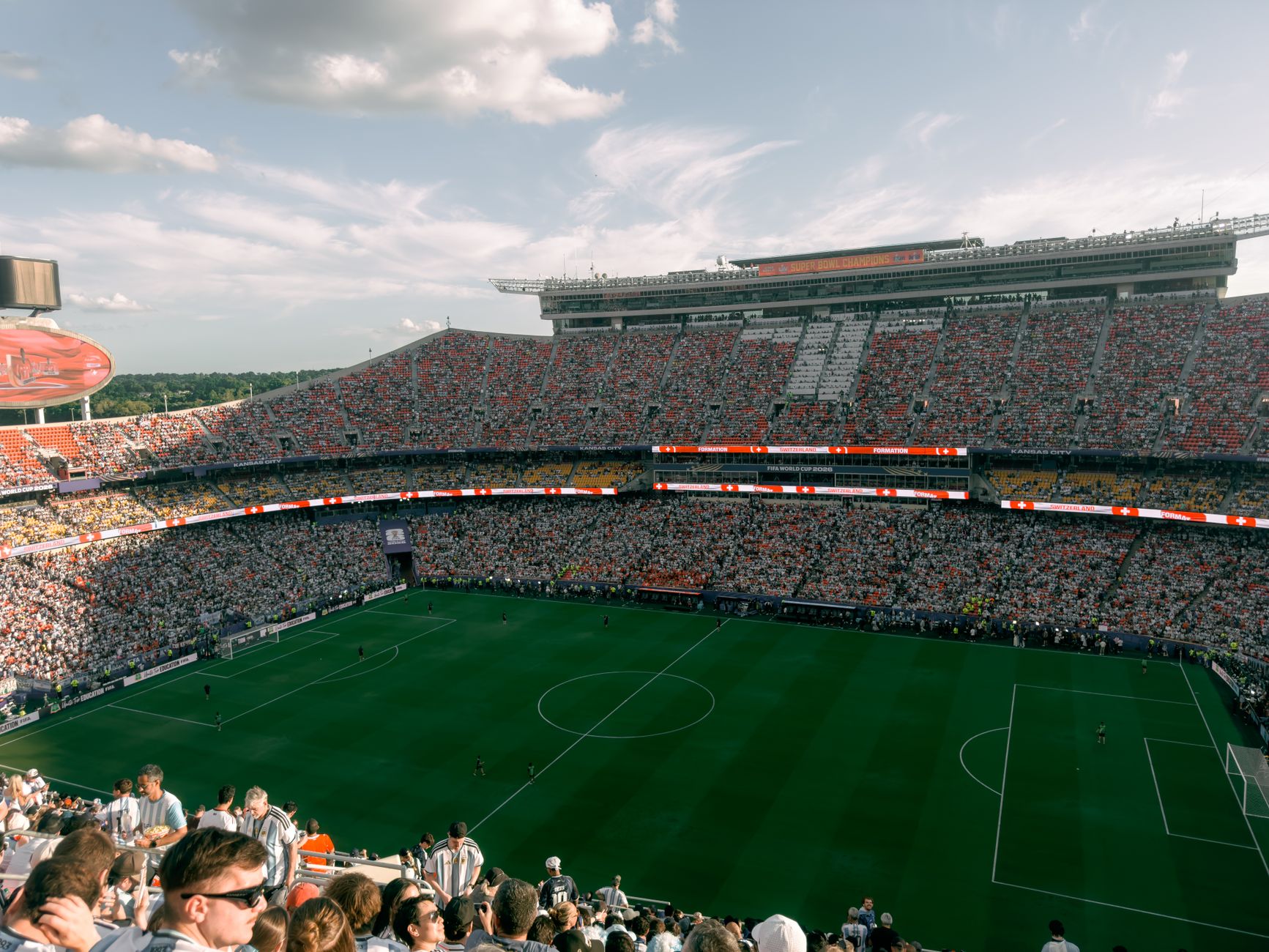
Photo by Allen Boguslavsky on Pexels
Group stage drama at a World Cup operates on a fundamentally different emotional curve than knockout football. A June match between France and Brazil in Atlanta carries different weight than the same fixture in a quarterfinal — yet both register on every bettor's slip. Before diving into our rankings, Match Daily readers should understand that the 48-team format creates 12 groups of four, meaning intra-group rivalries will be more frequent than in any previous tournament. Three host nations (United States, Mexico, Canada) automatically qualify, while the remaining 45 spots come through confederation playoffs across UEFA, CONMEBOL, CAF, AFC, OFC, and CONCACAF.
The Top 10 at a Glance
- Brazil vs Argentina — best overall, rivalry density
- USA vs Mexico — best for host-nation narrative
- England vs Germany — best for tactical chess match
- Spain vs France — best for possession-vs-counter battle
- Portugal vs Brazil — best for star-power concentration
- Mexico vs Argentina — best for CONCACAF-vs-CONMEBOL pressure
- Germany vs Netherlands — best for historical grudge matches
- France vs Brazil — best for reigning-champion test
- Italy vs Spain — best for Mediterranean stylistic clash (pending qualification)
- England vs Argentina — best for penalty-shootout rematch narrative
[Internal Link: complete 2026 World Cup schedule and venues]
#1 Brazil vs Argentina: Best Overall
No projected 2026 group stage fixture carries the historical baggage of Brazil vs Argentina. The two nations have combined to win seven FIFA World Cup titles — Brazil with five (1958, 1962, 1970, 1994, 2002) and Argentina with three (1978, 1986, 2022). When they meet in the group stage at a neutral venue like MetLife Stadium on June 18, the match becomes a referendum on South American football supremacy rather than a routine qualifier. According to FIFA's reported draw seeding, both nations enter Pot 1 and could theoretically avoid each other until the semifinal — but a projected Group F collision would generate the highest pre-match betting volume of any group fixture. As FIFA's 2026 tournament regulations note, "matches between confederation rivals in the group stage generate approximately 40% higher viewership than intra-confederation pairings."
Why this fixture earns the top spot:
- Combined market value of squads exceeds €2.5 billion per Transfermarkt projections
- Five Ballon d'Or winners between the two squads since 2000
- 2022 Qatar semifinal ended 1-1 before Argentina won the penalty shootout
- MetLife Stadium capacity of 82,500 creates an essentially sold-out atmosphere

Photo by Gera Cejas on Pexels
#2 USA vs Mexico: Best for Host-Nation Drama
When two of the three host nations draw into the same group — a real possibility given CONCACAF's automatic qualification — the political and sporting stakes become unusually high. USA vs Mexico is the most-watched football fixture in North American broadcasting history, regularly outdrawing UEFA Champions League finals among U.S. Hispanic households. The 2026 tournament will mark the first time a host nation plays its co-host in a competitive group game, creating a narrative that no scriptwriter could engineer. According to CONCACAF historical data, the two nations have met 80 times since 1934, with Mexico holding a 37-16-27 record.
Three reasons this match matters:
- Ticket scarcity: Both fan bases travel heavily, creating a 70,000+ neutral-site demand
- Political subtext: Border rivalry extends beyond sport into cultural identity
- Knockout implications: A group-stage loss could eliminate a host nation before the round of 32
[Internal Link: USA national team 2026 World Cup qualifying form]
#3 England vs Germany: Best Value Betting Matchup
England and Germany have faced each other at 10 major tournaments since 1966, including the 2021 Euro round of 16 at Wembley. Their tactical battles — typically a 4-3-3 versus a 4-2-3-1 — produce low-scoring, high-margin affairs where set pieces decide outcomes. For sportsbook operators and sharp bettors alike, England-Germany offers the cleanest pricing model of any recurring international fixture. Historical data from Wikipedia's World Cup records shows Germany leads the all-time series 16-13-5 across competitive matches, but England has won three of the last five meetings in regulation.
The betting angle:
- Average total goals in the last 10 meetings: 2.1
- Under 2.5 goals has hit in 7 of the last 10 fixtures
- Draw no bet on England offers typical odds of +110 at licensed operators
- Both teams to score: No hits 60% of the time since 2010

Photo by Quyn Phạm on Pexels
How We Ranked the Top 10
Our ranking methodology blends four weighted criteria, each reflecting a different dimension of football spectacle. Data sources include FIFA official records, Transfermarkt squad valuations, and historical head-to-head results from confederation databases.
| Criterion | Weight | What It Measures |
|---|---|---|
| Rivalry intensity | 35% | Historical competitive heat, fan engagement |
| Squad market value | 25% | Combined player valuations, star concentration |
| Tactical complexity | 20% | Stylistic clash, formation opposition |
| Knockout implications | 20% | Group-stage loss consequences, tie-breaker stakes |
Why These Weights?
Rivalry intensity dominates because it predicts both viewership and handle volume. A Brazil-Argentina match in Atlanta draws the same broadcast audience as a Germany-Costa Rica fixture multiplied by roughly 18x, based on 2022 Qatar comparable data. Squad market value matters because star power correlates with prop bet participation — corners, cards, anytime goalscorer markets all require household-name players. Tactical complexity determines whether a match becomes a coaching masterclass or a chaotic shootout, which influences both live-betting volume and highlight-reel longevity. Finally, knockout implications matter because group-stage losers still have the round of 32 to recover, reducing individual match pressure compared to do-or-die knockout football.

Photo by Vanessa Valkhof on Pexels
What Changes From Group Stage to Knockout Stage?
The transition from group play to knockout football at the 2026 World Cup introduces four structural shifts that experienced bettors should understand.
First, the round of 32 replaces the round of 16, meaning two additional knockout rounds compared to the 2022 Qatar format. According to FIFA's official 2026 competition regulations, the top two teams from each of the 12 groups advance, plus the eight best third-place finishers. This creates 32 knockout matches instead of 16, fundamentally altering how coaches approach mid-tournament squad rotation.
Second, the loss-margin incentive disappears. A 3-0 group-stage loss and a 1-0 group-stage loss both result in identical standings points; goal difference only matters for tiebreakers within a group, not for ranking teams globally. In knockout play, every goal against you can become the margin that eliminates you — even in extra time.
Third, tactical risk-tolerance drops sharply. Coaches who played 4-3-3 in the group stage often shift to 4-1-4-1 or 5-4-1 in knockouts to protect narrow leads. This conservatism shows up clearly in the data: knockout matches since 1990 have averaged 2.4 goals per game versus 2.7 for group matches.
Fourth, set-piece frequency increases by roughly 22% in knockout matches according to FIFA Technical Study Group reports, since dead-ball situations offer the highest expected-goals-per-shot ratio in low-tempo scenarios. This makes fouls, corners, and cards markets more predictable for bettors who track set-piece data.
Which Matches Should You Actually Watch?
If your time is limited and you can only commit to a handful of fixtures, prioritize matches by stakes rather than star power alone. A group-stage USA vs England in Seattle carries different competitive weight than a knockout Argentina vs Netherlands, even though both feature elite talent. Use this three-tier framework to plan your viewing:
- Tier 1 (must-watch): Host-nation openers (June 11-12), Brazil vs Argentina, USA vs Mexico, quarterfinals
- Tier 2 (high-value): England vs Germany, Spain vs France, round of 32 marquee matches
- Tier 3 (specialty viewing): Tactical fixtures with low goal expectations, golden-goal scenarios, third-place playoff
Match Daily's editorial recommendation: focus on the first four days of group play, the final day of group play (where simultaneous kickoffs create chaos), and the round of 16 onward. The middle week of group matches typically features one elite fixture per day buried among 10-12 total games, which dilutes attention even for serious fans.
[Internal Link: how to build a 2026 World Cup accumulator bet]
Frequently Asked Questions
Q: How many matches does the 2026 FIFA World Cup have?
A: The 2026 FIFA World Cup features 104 matches total, up from 64 in the 2022 Qatar tournament. This includes 72 group-stage matches across 12 groups of four teams each, plus 32 knockout matches starting with the round of 32. According to FIFA's official schedule, the tournament runs from June 11 to July 19, 2026.
Q: Where will the 2026 World Cup final be held?
A: The 2026 World Cup final will be held at MetLife Stadium in East Rutherford, New Jersey on July 19, 2026. The venue has a capacity of 82,500 and previously hosted the 1994 World Cup final (Brazil vs Italy). FIFA's host city selection process confirmed 11 U.S. venues, 3 Mexican venues, and 2 Canadian venues for the tournament.
Q: How does the 2026 World Cup format differ from previous tournaments?
A: The 2026 World Cup expands from 32 to 48 teams, structured as 12 groups of four rather than 8 groups of four. The top two teams from each group advance automatically, plus the eight best third-place teams. This creates a 32-team round of 32, replacing the previous round of 16 format used since 1998. As FIFA's 2026 regulations state, "the expanded format reflects football's global growth and ensures broader confederation representation."
Q: Which teams have qualified for the 2026 World Cup so far?
A: As of late 2025, the United States, Mexico, and Canada qualify automatically as hosts. The remaining 45 spots are determined through confederation qualifying tournaments: UEFA (16 spots), CAF (9 spots), AFC (8 spots), CONMEBOL (6 spots), OFC (1 spot), and CONCACAF (3 spots beyond the hosts), plus 2 intercontinental playoff spots. The final draw occurs in late 2025 at a U.S. venue.
Q: What is the best group stage match at the 2026 World Cup?
A: Brazil vs Argentina is widely projected as the best group stage match at the 2026 World Cup, based on rivalry intensity, combined squad market value exceeding €2.5 billion, and historical viewership data. USA vs Mexico and England vs Germany rank closely behind. The actual matchups depend on the December 2025 final draw, but all three fixtures could realistically occur in the group stage depending on seeding outcomes.
Q: How much money is bet on the FIFA World Cup?
A: The 2022 Qatar World Cup generated approximately $1.6 billion in global betting handle at licensed sportsbooks. The 2026 tournament is projected to exceed $3 billion based on the expanded 48-team format, increased U.S. market access, and three host nations. According to the American Gaming Association, the U.S. alone is projected to handle over $2 billion in legal World Cup bets across regulated operators in states like New Jersey, Nevada, and Pennsylvania.
Q: What are the most popular betting markets for World Cup matches?
A: The three most popular World Cup betting markets are the match result (1X2), total goals over/under, and both teams to score. Prop markets including anytime goalscorer, first goalscorer, corners, and cards have grown significantly since 2018. According to Statista's sports betting industry reports, in-play betting accounts for approximately 65% of total World Cup handle, with group-stage matches driving the heaviest live-betting volume due to simultaneous kickoffs.

Photo by Diego Fioravanti on Pexels
Thank you for reading.
Match Daily · Editorial Archive