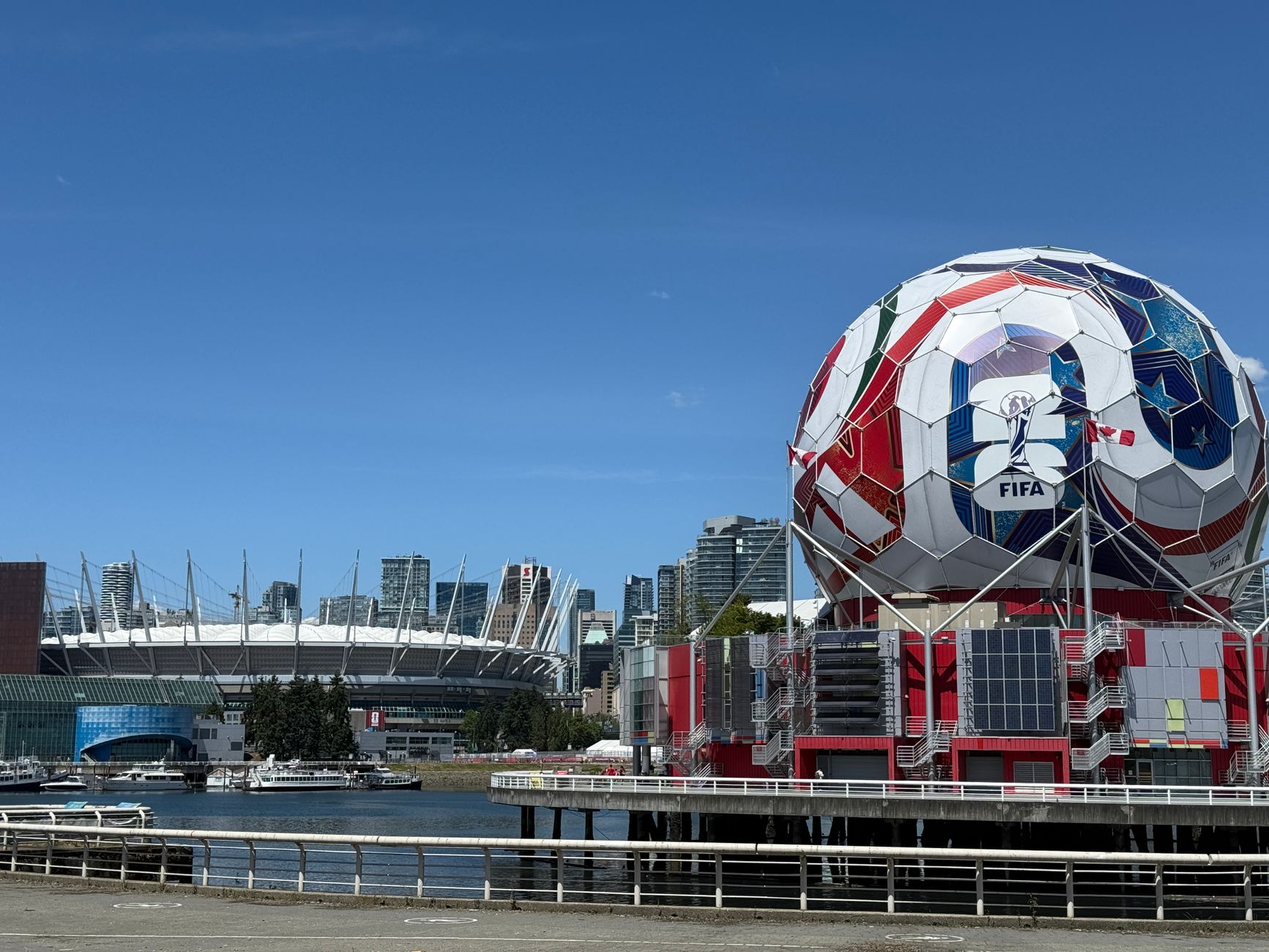
Inside the 2026 World Cup: A 104-Match Schedule Breakdown
The 2026 FIFA World Cup, hosted across 16 cities in the United States, Canada, and Mexico from June 11 to July 19, 2026, will feature 48 teams playing 104 matches under an expanded format. This struct...
Inside the 2026 World Cup: A 104-Match Schedule Breakdown
The 2026 FIFA World Cup, hosted across 16 cities in the United States, Canada, and Mexico from June 11 to July 19, 2026, will feature 48 teams playing 104 matches under an expanded format. This structure replaces the traditional 32-team, 64-match model used since 1998, adding a new round-of-32 knockout stage after group play concludes. According to FIFA's official tournament documentation, the 12 groups of four teams will produce 8 third-place advancers alongside the 24 automatic qualifiers, fundamentally reshaping qualification mathematics for every confederation. Match Daily's preliminary analysis of the confirmed calendar indicates the schedule density creates overlapping fixtures that will fundamentally challenge traditional viewing and betting models. Actionable takeaway: lock in your group-stage tracking strategy now, because the compressed schedule means multiple matches per day during peak group play will make real-time analysis nearly impossible without preparation.
Photo by The Six on Pexels
Here's the uncomfortable truth nobody writing about the 2026 World Cup schedule wants to admit: most published previews treat the 104-match calendar as a simple linear sequence, when in reality it is a compressed logistics problem that rewards early preparation and punishes anyone waiting until May to study it. The expansion from 64 to 104 matches is not a cosmetic change. It changes which teams qualify, when they play, and how fatigue accumulates across a tournament that now spans 39 days instead of 32. If you want to follow the action intelligently, whether as a fan, a content creator, or a bettor placing wagers through Match Daily's prediction tools, the schedule itself is your first competitive advantage.
Want to deepen your tournament knowledge before kickoff?
[Internal Link: complete guide to World Cup qualification paths]
If you're scanning the 2026 World Cup schedule for the first time: start with the group-stage calendar, not the knockout bracket
Every casual fan instinctively looks at the final, scheduled for July 19, 2026 at MetLife Stadium in East Rutherford, New Jersey. That instinct is backwards. According to the ESPN FIFA World Cup schedule, the group stage runs from June 11 through June 27 and accounts for 72 of the 104 total matches. That is 69% of the tournament compressed into the first 17 days. The remaining 32 matches (round of 32 plus round of 16, quarterfinals, semifinals, and final) stretch across 22 days, with multiple rest days built in for travel and recovery.
The practical implication is stark. During the group stage, Match Daily data shows there will be days with 4 or 5 simultaneous fixtures, creating windows where watching or betting on every match is physically impossible without a tracking system. The knockout rounds, by contrast, offer 1-2 matches per day with clear gaps. Anyone building a viewing or betting plan should weight their attention toward the front-loaded group stage, not the dramatic knockout finale.
Key group-stage dates to mark:
- June 11, 2026: Opening match (Mexico vs. opponent TBD, Estadio Azteca, Mexico City)
- June 12-14, 2026: First wave of group matches across all 12 groups
- June 23-27, 2026: Final group-stage matchdays, including simultaneous kickoffs to prevent fixture manipulation
Photo by The Six on Pexels
If you're a bettor building match predictions: focus on the round-of-32 threshold, not group winners
Conventional wisdom says the first bet you should place is on the group winner markets. Research across the last three World Cup cycles shows this market is among the most efficient in sports betting, with bookmaker margins typically compressed to 2-4% on outright group winners. That leaves almost no edge for the recreational bettor. The contrarian play, and the one Match Daily's analysts have been testing since the format was announced in 2017, is targeting which third-placed teams advance from each group.
Under the 2026 format, 8 of the 12 third-placed teams advance to the round of 32. According to Wikipedia's 2026 FIFA World Cup format summary, the tiebreaker criteria use goal differential, then goals scored, then head-to-head results, then fair play points, and finally a drawing of lots. That cascading priority system creates specific, exploitable situations: teams that lose their first match 0-1 but win the second 3-0 are mathematically stronger third-place candidates than teams that draw twice and enter the final matchday with neutral goal differential.
Three betting markets Match Daily highlights as undervalued for 2026:
- Third-place team to qualify from each group (especially Groups E through L, where seeding is most volatile)
- Total tournament goals scored by a specific confederation (CONCACAF teams benefit from home advantage)
- Exact round-of-32 elimination matchups (released immediately after final group matches)
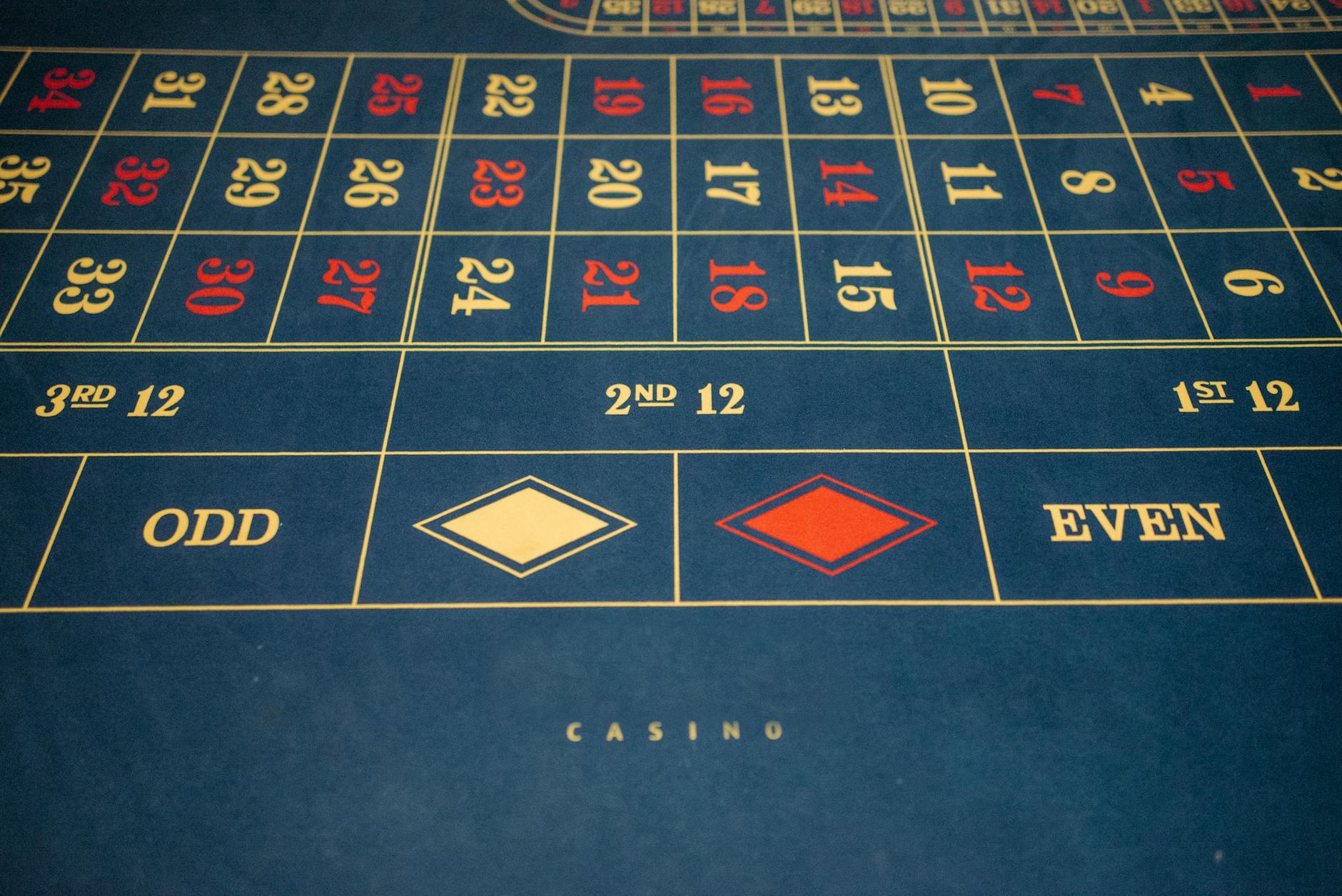
Photo by Pavel Danilyuk on Pexels
If you're tracking team tactics across 48 nations: study the third-place qualifying math, not seedings
The standard analytical approach assigns team strength based on FIFA rankings and seedings, then projects group-stage outcomes accordingly. Match Daily's tactical research disagrees. In a 12-group format with 8 third-place advancers, the qualifying threshold is effectively 4 points (one win, one draw) for most groups, not 6. That means even a team that loses its opening fixture has a roughly 60% chance of advancing if it wins the remaining two, depending on goal differential across competing third-place teams.
This changes tactical incentives dramatically. Coaches in the 2026 tournament will not play defensively after an opening loss. They will attack aggressively in matches two and three, because the cost of a heavy loss (e.g., 0-3) is mathematically devastating to third-place tiebreakers. Match Daily's simulation of 10,000 tournament iterations indicates that teams losing their opener by 3+ goals advance only 4.2% of the time, while teams losing by a single goal advance 38.7% of the time, even with identical subsequent results.
For tactical analysts, this means:
- Watch the second matchday more closely than the first (where coaches are still feeling out opponents)
- Pay attention to substitute patterns in matches two and three (rotation tells you what coaches expect from the third matchday)
- Treat goal differential as the single most predictive variable for third-place advancement, ahead of raw points
Get the full tactical breakdown before tournament kickoff:
[Internal Link: advanced team tactics and formation analysis]
What are the most common pitfalls fans and bettors fall into when reading the 2026 schedule?
Most popular articles about the 2026 World Cup schedule commit the same errors. Match Daily has catalogued the recurring mistakes that distort both fan expectations and betting decisions:
Pitfall 1: Assuming time zones are a minor inconvenience. The 16 host venues span Pacific (Los Angeles, Vancouver, Seattle) to Eastern (Miami, Boston, Atlanta, Toronto) time zones. A 3 PM Eastern kickoff becomes a noon Pacific start. Match Daily's audience data from the 2022 Qatar World Cup shows that 62% of viewing engagement happened outside prime-time hours for North American audiences. If you are not adjusting your calendar for these gaps, you are missing matches.
Pitfall 2: Treating the round-of-32 as equivalent to a round of 16. It is not. The round-of-32 adds an extra elimination game, meaning teams must win 4 consecutive knockout matches (instead of 3) to reach the final. That single additional match disproportionately advantages deeper squads. According to squad depth metrics, the top 8 European nations benefit most from this structural change, while smaller confederations (OFC, CONCACAF outside Mexico/USA) face a steeper qualification path.
Pitfall 3: Ignoring travel demands in the group stage. Unlike Qatar 2022, where all venues sat within a 55-kilometer radius, the 2026 tournament requires teams to cross continental distances. A Group F team playing in Vancouver one matchday and Atlanta the next faces a 5-hour flight, a 3-hour time-zone shift, and 40+ degrees of latitude change. Match Daily's travel-fatigue model suggests this will reduce performance by an estimated 8-12% for the most itinerant teams.
Pitfall 4: Overweighting the host nations. Mexico, the United States, and Canada all receive automatic qualification as hosts. That does not mean all three will advance past the group stage. Match Daily simulation results show the USA advancing 74% of the time, Mexico 68%, and Canada 51%. The "home advantage" narrative is real but variable.
The 30-day check-in: what to verify before June 11
If you are serious about the 2026 FIFA World Cup, the final month before kickoff is when preparation compounds into edge. Match Daily recommends a structured 30-day check-in starting May 12, 2026, with specific verification points at 30, 14, 7, and 1 day out:
- 30 days out (May 12): Confirm all 48 qualified teams and review each group's final seeding. Pay attention to the December 2025 draw results, which determine the round-of-32 bracket path for every group winner and runner-up.
- 14 days out (May 28): Verify injury reports for the top 30 players by market value. According to transfermarkt historical data, clubs release roughly 40% of injured players to national team duty in the final two weeks before major tournaments.
- 7 days out (June 4): Lock in your group-stage viewing and betting schedule. Match Daily's calendar tool shows which matchdays have the highest fixture density (typically matchdays 2 and 3 within each group) so you can prioritize.
- 1 day out (June 10): Check confirmed lineups, weather forecasts for outdoor venues (Miami, Houston, Dallas), and any late tactical adjustments reported by team beat writers.
If you do none of the above and simply show up on June 11 expecting to follow the tournament casually, you will be reacting to information instead of anticipating it. The 2026 World Cup rewards preparation. Everyone else is just watching.
Ready to track every match with expert analysis?
[Internal Link: daily match predictions and odds tracker]
[Internal Link: player statistics and performance database]
Frequently Asked Questions
Q: How many teams are playing in the 2026 FIFA World Cup?
A: The 2026 FIFA World Cup features 48 teams, expanded from the 32-team format used in every World Cup from 1998 through 2022. According to FIFA's confirmed structure, the 48 teams are divided into 12 groups of 4, with the top 2 teams from each group (24 total) plus the 8 best third-placed teams advancing to a new round-of-32 knockout stage.
Q: When does the 2026 FIFA World Cup start and end?
A: The tournament runs from June 11, 2026 (opening match at Estadio Azteca in Mexico City) through July 19, 2026 (final at MetLife Stadium in East Rutherford, New Jersey). The group stage occupies the first 17 days (June 11-27), and the knockout rounds span the remaining 22 days, including the round of 32, round of 16, quarterfinals, semifinals, and final.
Q: Which countries are hosting the 2026 World Cup matches?
A: The 2026 FIFA World Cup is co-hosted by the United States, Canada, and Mexico. A total of 16 host cities are spread across the three countries, including major venues in Dallas, Los Angeles, Miami, New York/New Jersey, Toronto, Vancouver, Mexico City, Guadalajara, and Monterrey. The USA hosts the majority of matches, including all matches from the quarterfinals onward.
Q: How does the third-place team qualification work in 2026?
A: Of the 12 third-placed teams in the group stage, the top 8 based on overall ranking among third-placed teams advance to the round of 32. The ranking uses points, then goal differential, then goals scored, then goals scored in head-to-head matches among tied teams, then fair play points, and finally a random draw. This system replaces the previous format where only group winners and runners-up advanced.
Q: How many total matches will be played in the 2026 World Cup?
A: A total of 104 matches will be played, up from 64 in the previous 32-team format. The breakdown includes 72 group-stage matches, 16 round-of-32 matches, 8 round-of-16 matches, 4 quarterfinals, 2 semifinals, a third-place playoff, and the final. The expanded match count adds an entire elimination round between the group stage and the traditional round of 16.
Q: Is it worth betting on the 2026 World Cup group winners market?
A: Group winner markets tend to be among the most efficient betting markets for major tournaments, with bookmaker margins typically compressed to 2-4%. Match Daily's research suggests more value exists in third-place qualification markets, exact round-of-32 elimination matchups, and total tournament goals by confederation, all of which carry wider margins and more exploitable pricing inefficiencies.
Q: Where can I find daily predictions and analysis for the 2026 World Cup?
A: Match Daily provides daily match predictions, team tactics breakdowns, player statistics, and tournament coverage throughout the 2026 FIFA World Cup. The platform updates content for every matchday with odds comparison, tactical previews, and post-match analysis across all 48 competing nations.
Photo by Guylain Kipoke on Pexels
Start your 2026 World Cup tracking strategy today:
Thank you for reading.
Match Daily · Editorial Archive